
How does taste shape the way we remember an artwork?
The Running Horse dinners begin with a gustative gesture looking to extends how the table may deepen our relationship with an artist’s work. (read time 3.5min)
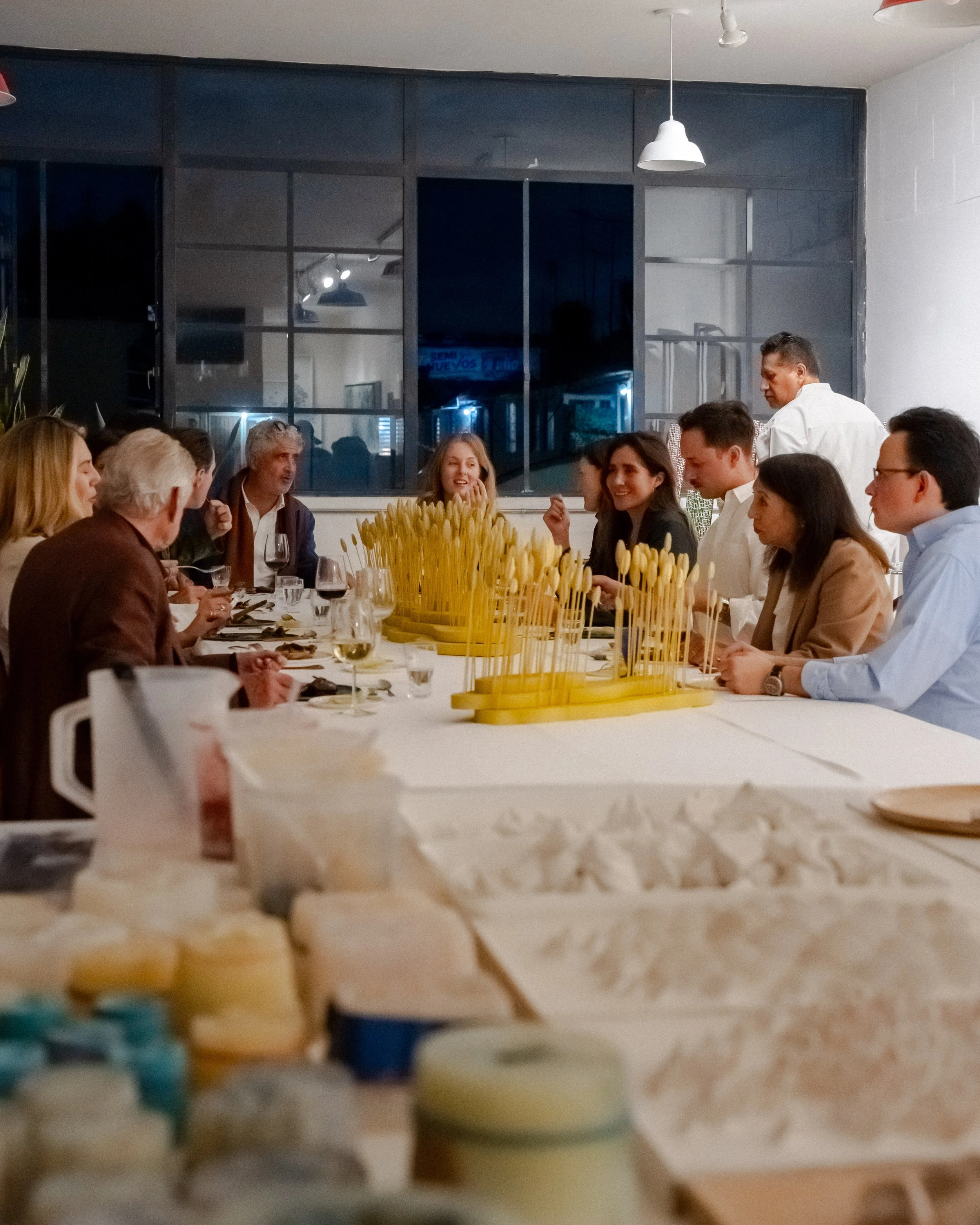
Dinner in the world of Sarah Philouze, Mexico City, June 12 2026
Each menu begins in conversation, inside the studio. We are curious to uncover how one nourishes themselves through their memories, familial rituals that shape a way of starting a week, the ingredients that spark their joy -or ignite disgust, overall, weaving in these sensorial acts of care often overlooked.
While the nature of our events always changes in context and locations, our table is a strict constant. Our menus emerge as loyal layers honouring the artist, cherishing newfound pockets of narrative to encounter the work with new lenses and more importantly, meet the person behind it.
For our dinner with Sarah Philouze, the work was extended at the table with whimsy, through edible mouldings in marshmallow.
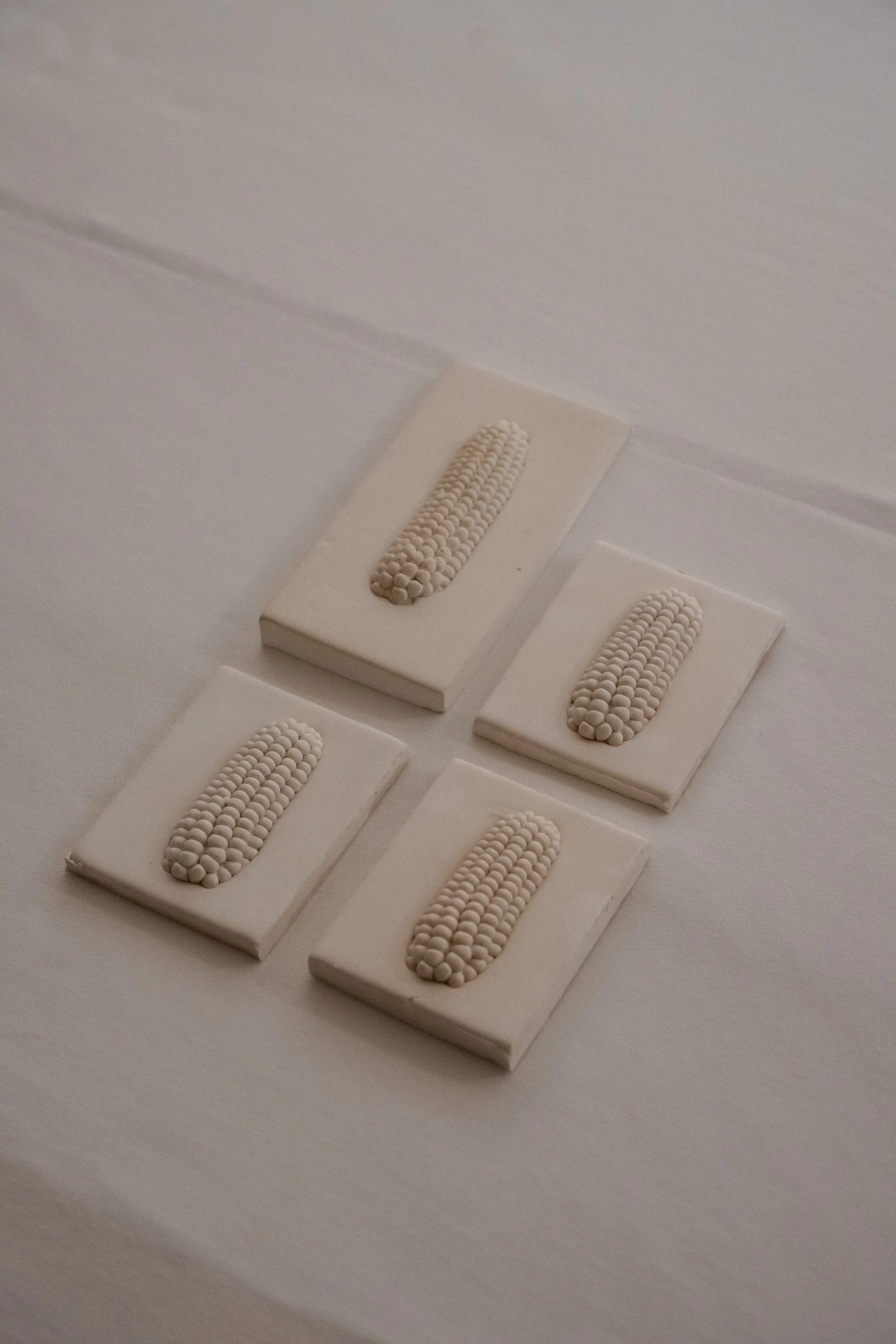
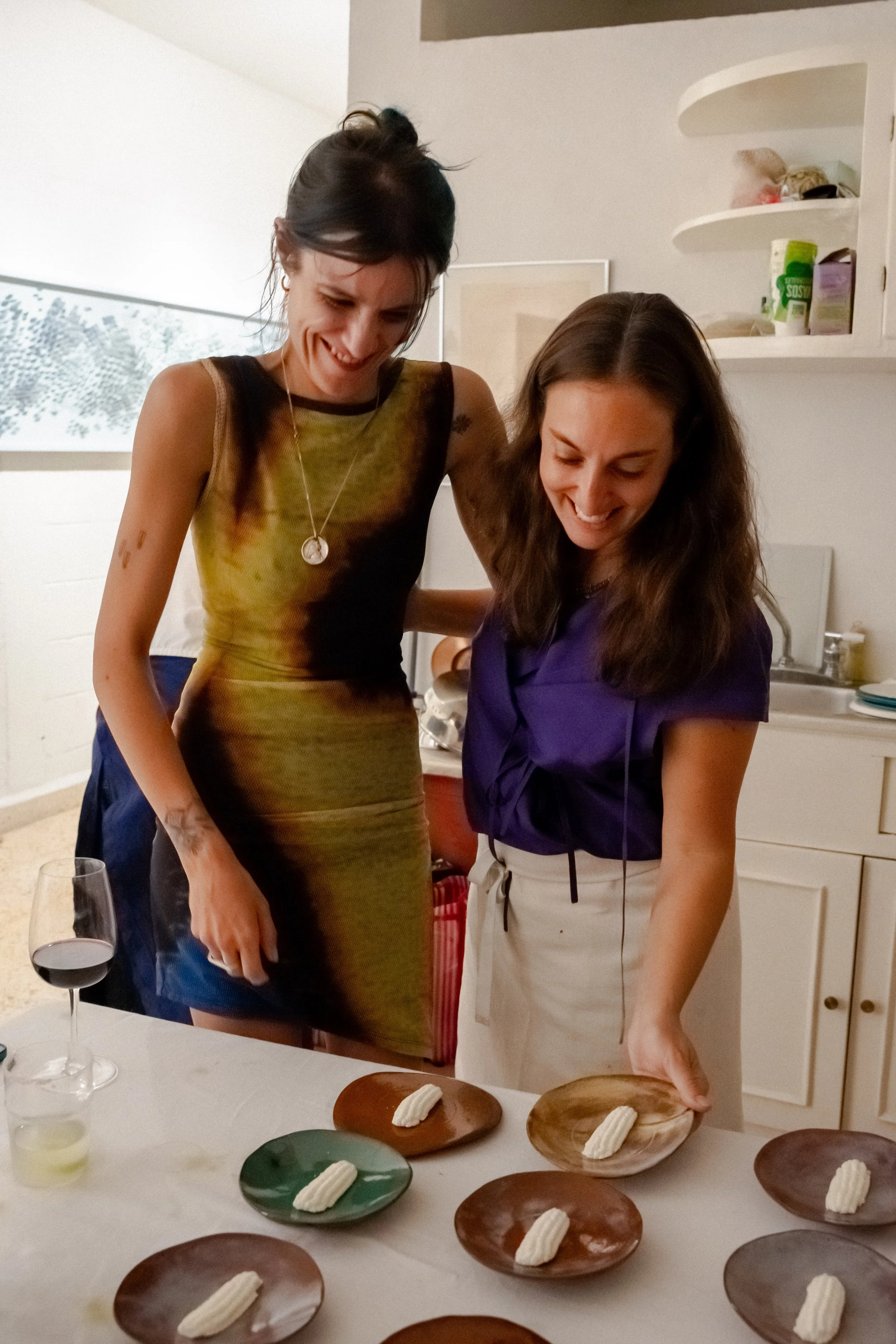
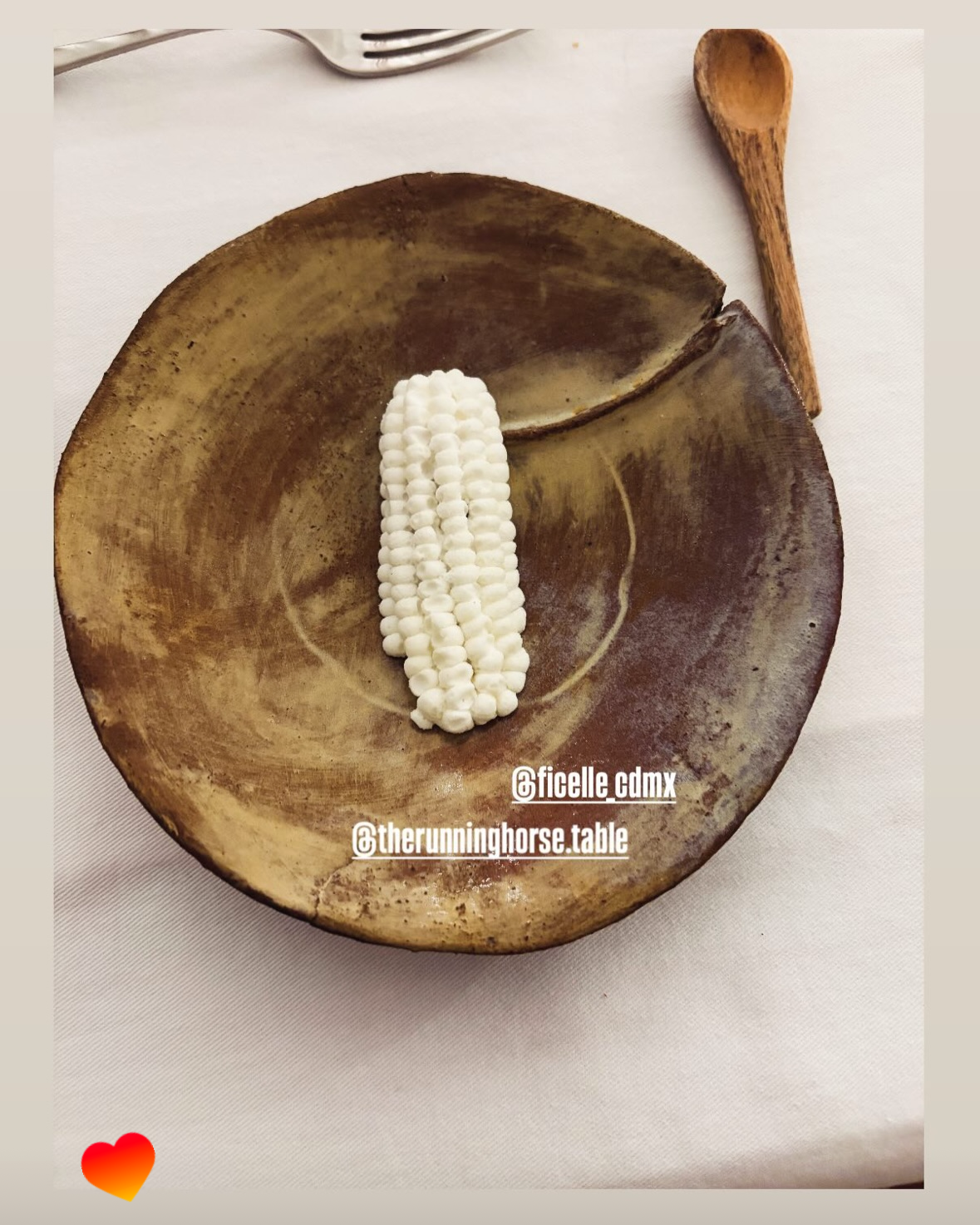
Sarah’s Marshmallows, Mexico City, June 12 2026
Sarah’s milky white casts preserve the imprint of botanical forms, asking us to slow our gaze and contemplate our power to renew ourselves. These moulding series were presented at the table for guests to come closer and hold the art. Then, the marshmallow mouldings made their way, with gleeful defiance, encouraging guests to hold, but also touch, smell and eat the art.
The artwork invited contemplation. The marshmallow invited participation.
Observation turned into experience and the artwork lingered through memory in an entirely new way.
Three artists that inspire us
Artists have long invited food into their practice as a way of transforming the relationship between artwork and audience.
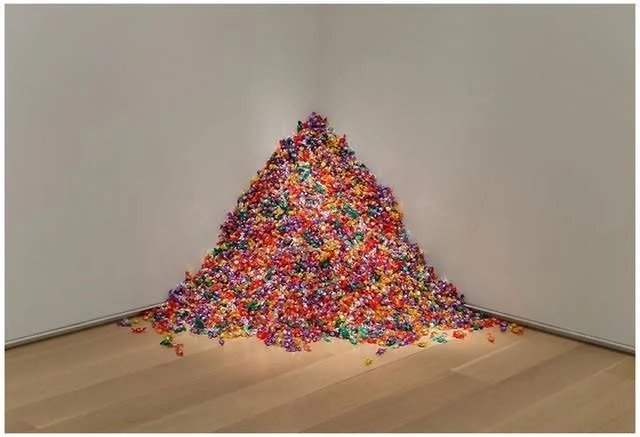
Felix González-Torres, Untitled (Portrait of Ross), 175 pounds of wrapped candy, 1991.
When Félix González-Torres presented Untitled (Portrait of Ross in L.A.) (1991), visitors were invited to take pieces of candy from a pile weighing the equivalent of his partner Ross’s healthy body weight. Each sweet removed became an act of participation, remembrance and collective care. The artwork continually disappeared and renewed itself through the audience’s gesture.
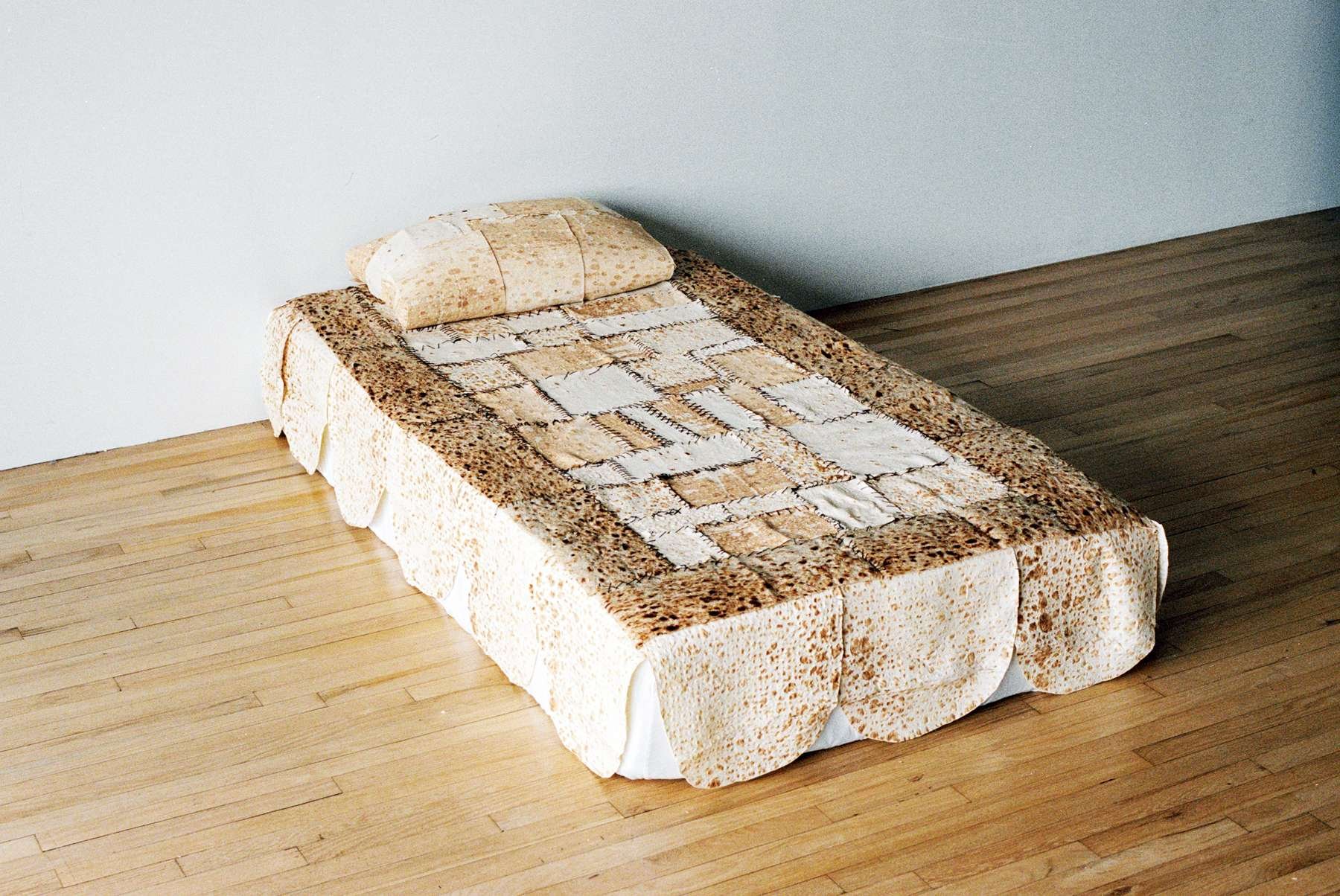
Laila Gohar, Bread Bed, 2023.
One of our favourite works by Laila Gohar is Bread Bed. A bed covered by a stitched cover, made of traditional Egyptian flatbread inviting wonder through scale, material and abundance, and dissolving the boundary between the domestic, the ceremonial and the edible. The work foregrounds craft through the tactile presence of fabric and bread, materials deeply tied to her Egyptian heritage and to feminine traditions of making, care and ritual.
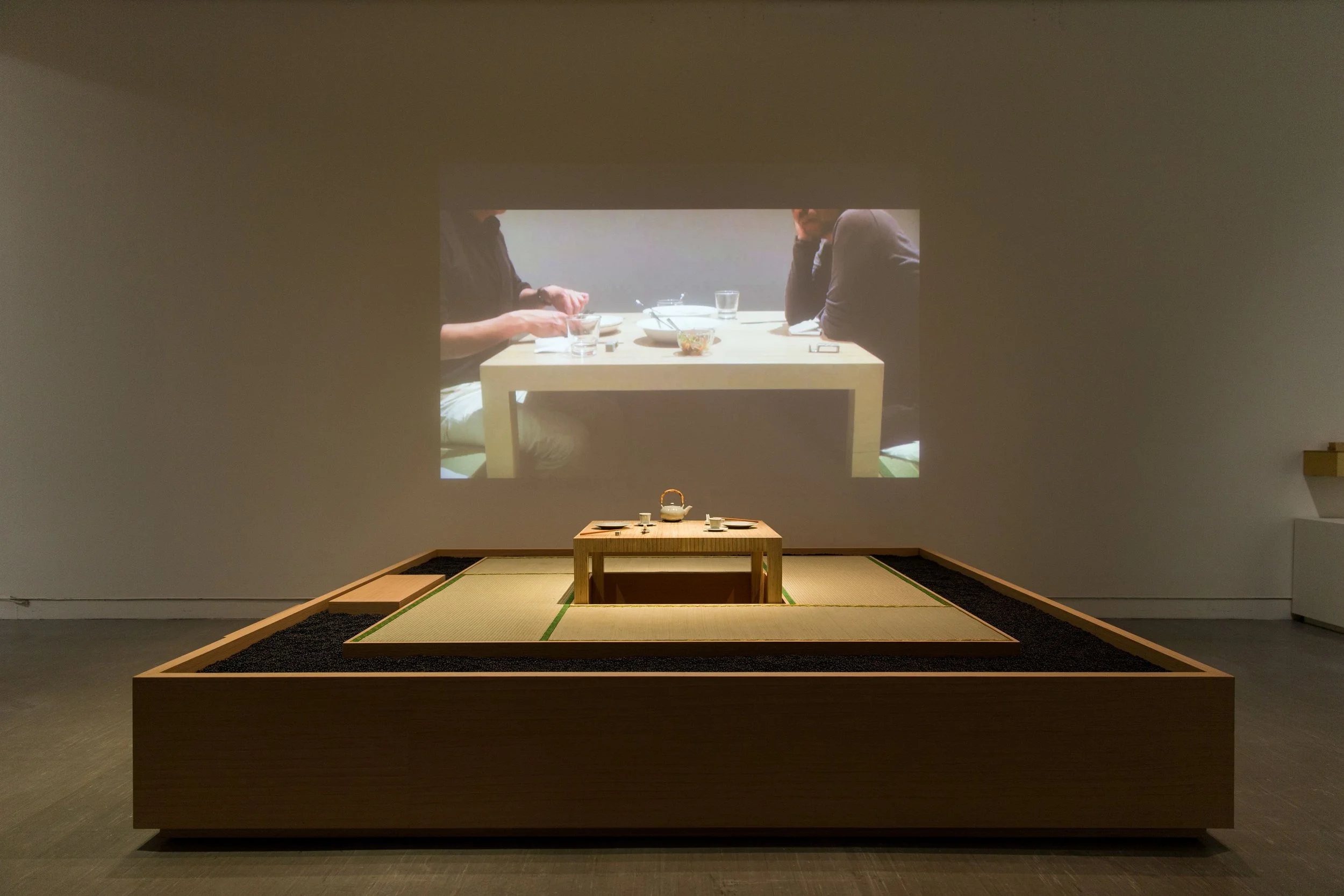
Lee Mingwei, The Dining Project, 1997, Courtesy : Taipei Fine Arts Museum, Taiwan.
Lee Mingwei’s The Dining Project offers another perspective. In this ongoing work, the artist invites a single guest at a time to share an intimate meal prepared and served within the gallery space. The encounter unfolds through conversation, silence and presence, transforming the act of dining into a quiet performance of trust, vulnerability and connection. The meal becomes both medium and memory, existing only through the shared experience between artist and participant.
Each of these artists reminds us that food holds a remarkable capacity to change our relationship with an artwork. Taste asks us to participate. It extends contemplation beyond the eye and into the body. It creates memories that remain vivid long after the experience itself.
This possibility continues to shape how we think about hospitality at The Running Horse.
Around our table, food extends a personalised language for encountering art. It invites guests to move beyond observation, linger through all of our senses, and imprint our experience in an entirely new way.
